Author Archives: vermilya01
Now We Welcome
The Austrian poet, Rainer Maria Rilke (1875-1926) wrote:
“And now let us welcome the new year,
full of things that have never been.”
As this new year and new semester begins, I’m crafting a course for district staff regarding our commitment to humanity, justice, belonging, and community. There are so many topics, so many resources! How do I winnow it all down to a nine-week class? There are stacks of books in my office, and around my house. What themes? Which articles, books, podcasts, or films will be most helpful to the people in the class?
Today I mused that creating a syllabus is like organizing a playlist for someone you really care about. What will they get into, even if the theme is new, genres never explored or actively avoided, but all the songs are what you love and want to share? What is important is the artistry, point of view, the beat. My son will turn down the car sound system because suddenly he realizes the lyrics will offend me. Luckily, I can’t really distinguish the lyrics, as he explains why he turned it off: he loves the beat.
The beat. The pulse. The energy. Back to the syllabus and thinking: I acknowledge how overwhelming it is to even try to understand so many complex things that we, and the young people in our lives, are faced with every day. Sometimes we certainly can’t “understand.” We can listen, get thoughtful, and realize new insights. Our empathy develops as we stay curious. We won’t all like the same music, we won’t all love the themes. We will learn and grow together as we dig deep into what is being revealed as we go through these times. We have live-action examples of racism, violence unleashed, violations of many amendments to the Constitution in our daily news.
I hope this course helps us imagine and create possibilities for our students that have never been, that we have long believed could be. But this class isn’t the only opportunity for that – If you have dreams, ideas or questions about ways to support humanity, justice, belonging, and community, please let me know.
I’d love to think with you.
Humanity & Justice To All
I read a charming story about a beet and maize product that melts road ice and feeds the birds. I can’t find a reference on any site but social media, so this is a ‘too good to be true’ tall, tall tale. The photograph shows birds dining on the deep red beet path, but I think the plow is headed in the wrong direction.
Wondering about media authenticity and reliability is something our educators deal with every day. Photographs and facts are not necessarily, well, real. Finnish students start thinking about media literacy as early as kindergarten. The disinformation coming into Finland may be from Russia, with whom they share an 800-mile border. Knowing what is true is key to their survival. I appreciate this Finnish educator’s statement, “You have a right to your own opinion, but you do not have the right to your own facts.”
November leads the way to winter and holidays. My childhood Thanksgiving table was decorated with little Pilgrim candles, a boy with a tall black hat, a girl with a long white apron, and a turkey with its tail unfurled. Of course, I now know that the real depth of the history of our Thanksgiving is much more complex than anything those three little wax figures implied.
The story of the beet and maize de-icer and the complexity of the November holiday remind me to pay attention, be curious, and check sources.
Speaking of sources, for your reading pleasure I suggest a charming and disarming novel, Lula Dean’s Little Library of Banned Books, by Kirsten Miller. A small Southern town, a statue radiating harm and history, a book-banning committee, and a little free library that suddenly incites new awareness. Race, extremism, broken relationships with neighbors, and estranged families all come together unexpectedly. Fair warning though; reading this book may keep you up later than you intended because it is so darned engaging.
For December reading with young friends, please consider Come and Join Us! by Liz Kleinrock and illustrator Chaaya Prabhat. You’ll find out about eighteen dazzling year-round global holidays. As we go into December and make our way into the New Year, Kleinrock’s book reminds me that there are many ways to celebrate human culture and belief. May we find ways to welcome them all, to ask questions, check our sources, and learn from good conversations.
Celebrate the lights and wonder of this time of year–
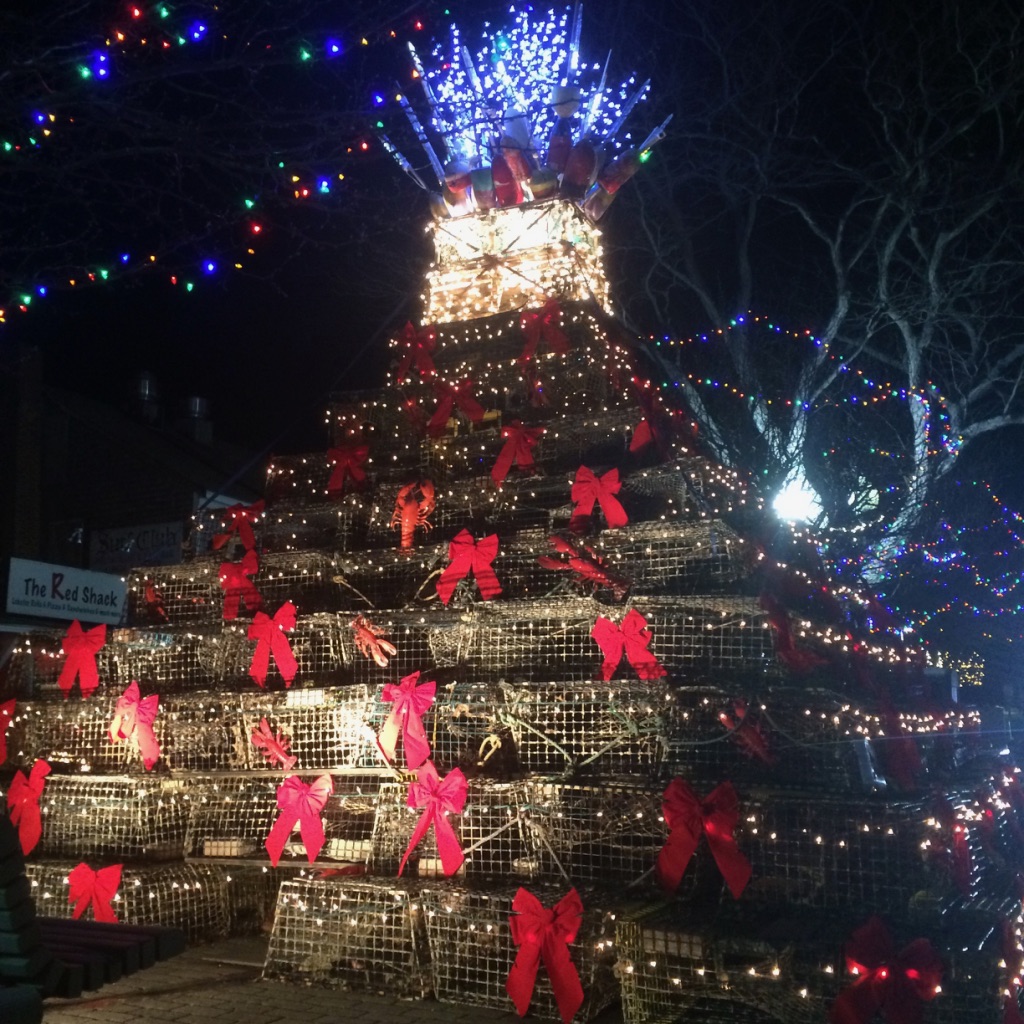
Provincetown’s Lopez Square Lobster Pot Tree (2016)
Curiosity
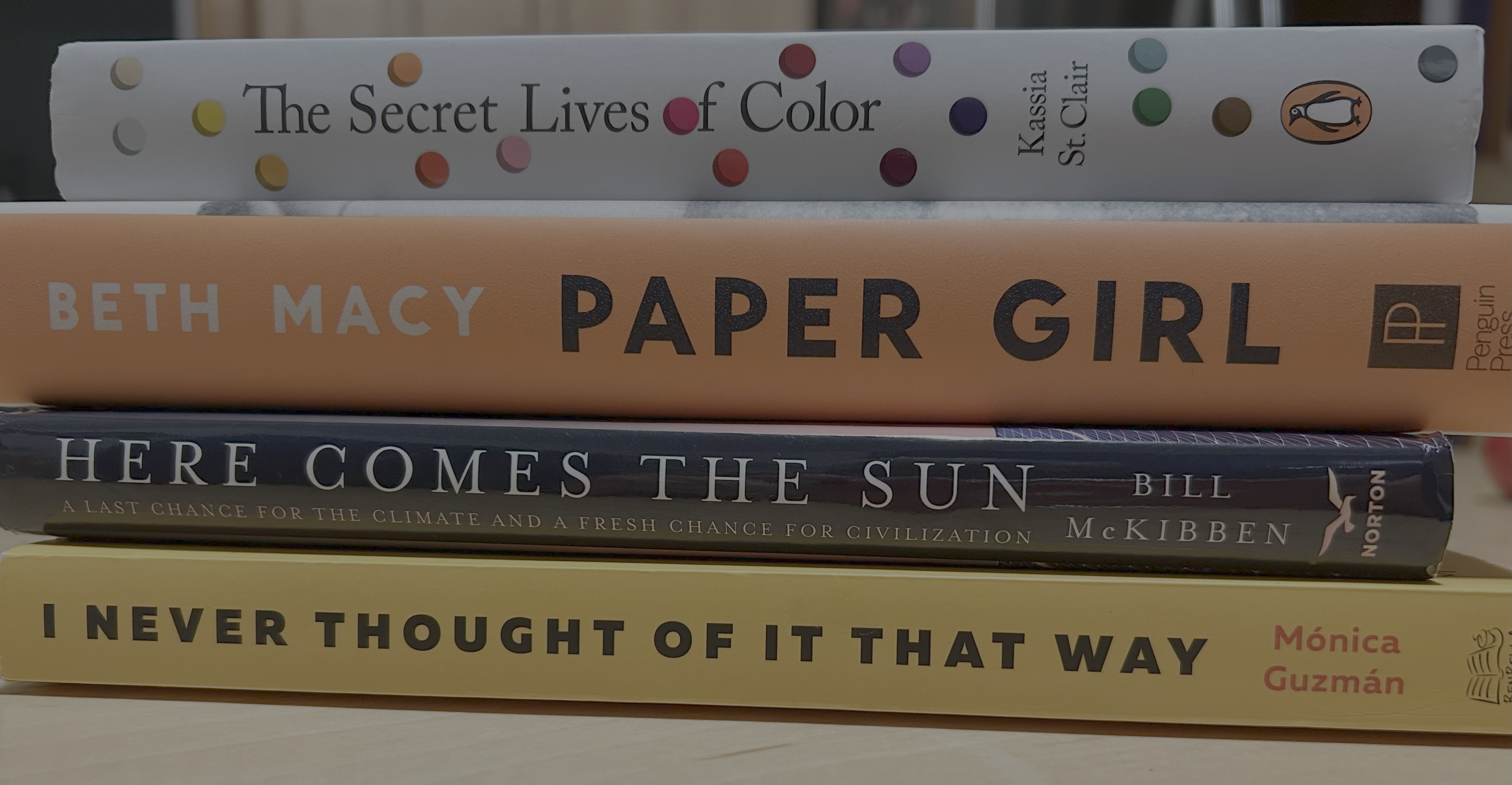
My job description includes reading, keeping up with ideas and information so I can be a resource to educators in their efforts to ensure that all students can thrive and learn. Lately, I’ve been reading about nature, art, democracy, history, and how to have hard conversations. Here’s a sample:
The Secret Lives of Color offers detailed historical and sociological stories of seventy-five colors. Did you know that about 70,000 dried bugs are needed for a pound of cochineal or crimson powder? Red dye E120 has been used in make-up, color for M & M’s and other foods? Or that pink was once a color just for boys, since it was closer to red, the color of war? Cerulean blue, on the other hand, represents peace along with olive branches on the flag of the UN.
The book that kept me up reading late recently is Paper Girl: A Memoir of Home and Family in a Fractured America by journalist Beth Macy. She returns to her hometown of Urbana, Ohio to understand the sharp changes there, wondering in particular how her family, former classmates, and neighbors’ perspectives and beliefs had shifted so far from where they’d been when she was growing up.
Her hometown had always been besieged by losses: of manufacturing jobs, of generations of family dying of alcoholism, drugs, and relentless poverty. Over the thirty years since high school graduation, those losses have grown devastatingly deeper. Public school teachers who had helped Macy survive and get to college were still at it–under very different circumstances. The story Macy tells is full of sadness and compassion for her hometown, and questions how communities like it might heal.
Here Comes the Sun: A Last Chance for the Climate and a Fresh Chance for Civilization by Vermont neighbor Bill McKibben is full of real possibilities and hope. A hopeful McKibben was intriguing since I’ve always thought of him as a climate truth teller, informative but discouraging. McKibben writes that the creative future of solar and wind power offers just about enough free energy for all. Imagine that.
Meeting people with curiosity is one of my guiding principles. I may wonder, how did this student or adult come to believe as they do? What is their experience? It brings out the best of my educator self and keeps me keenly wondering how things are the way they are. Sometimes those conversations are hard:
Have you been in situations when you just wish you had a response to something you can’t believe was said? My colleagues and I wonder sometimes, does that student even know what the word they just used means? How do we respond?
I Never Thought of It That Way: How to Have Fearlessly Curious Conversations in Dangerously Divided Times by Mónica Guzmán offers some answers to those questions. She writes,
“We don’t see with our eyes, after all, but with our whole biographies. It’s time our sense of perspective took that into account.”
Guzmán asks readers to consider others’ experiences, asking at one point if all of us could pass the naturalization civics test. It was humbling for me to look over the questions, knowing how crucial and precious passing this test is for so many. I would have to study hard to refresh my high school civics knowledge!
My curiosity keeps bringing me back around to how colors are made, to this fact in particular from The Secret Lives of Color about those crimson making bugs, “…in the year 1587 alone, around 144,000 pounds or 72 tons of cochineal were shipped from Lima [Peru] to Spain. (That is roughly 10,080,000,000 insects.)”
How in the world did someone figure that out!?!?!
Imagining New Worlds
When I first began contributing to a newsletter for my local school district, I explored heritage months: Black, Women’s, Arab American, Asian American & Pacific Islander, Jewish, LGBTQ+ Pride, Disability Pride, Latinx, Native American/Indigenous Peoples, and more. Of course, one month each is not enough to celebrate the history and complexity of each group, so these pieces were teasers, meant to inspire life-long learning.
In a recent post I commented on a line from the poem “Belief in Magic” by Dean Young. “The Declaration of Independence was written with a feather.” Imagine. A document that holds dreams and powers we still hold dear was crafted with a feather. It is astonishing to think about.
Classrooms are wonderful places to learn to cherish the rights and values enshrined in the Declaration of Independence. Last week at an elementary school, members of their Humanity and Justice group created a learning opportunity about the history of Memorial Day. Everyone was welcome, as students learned about the Race Course, a Civil War prisoner of war camp in Charleston, South Carolina, notorious for its horrific conditions, and abandoned after the end of the war. Students learned about a group of formerly enslaved people who reburied Union Soldiers found in a mass grave there, and in honor of those they buried, declared that day Memorial Day.
The students read A Day For Rememberin’ (you can listen to it here) which tells the story of ten-year-old Eli who helped prepare the fencing that surrounded the graveyard at the former prison, ahead of the ceremony that took place there on May 1, 1865.
In his 1963 speech, A Talk to Teachers, James Baldwin spoke of troubling times, and said “those of you who deal with the minds and hearts of young people must be prepared to “go for broke.”
I read a few 2025 commencement addresses, and found words like these repeated: “stay human,” “make yourself indispensable,” “don’t follow the rules—create better rules,” and “Ignore other people’s blueprints—they depict a world we no longer live in.”
And this from sociologist Ruha Benjamin, “Remember to imagine and craft the worlds you cannot live without, just as you dismantle the ones you cannot live within.”
There are awe-inspiring opportunities in our schools to imagine new worlds. That Memorial Day lesson was that kind of opportunity. Our young people need us to be willing to make those opportunities happen to revise models, imagine possibilities, open-heartedly risk and ‘go for broke.’
I’m grateful to ‘go for broke’ with all of you.
Mother’s Day
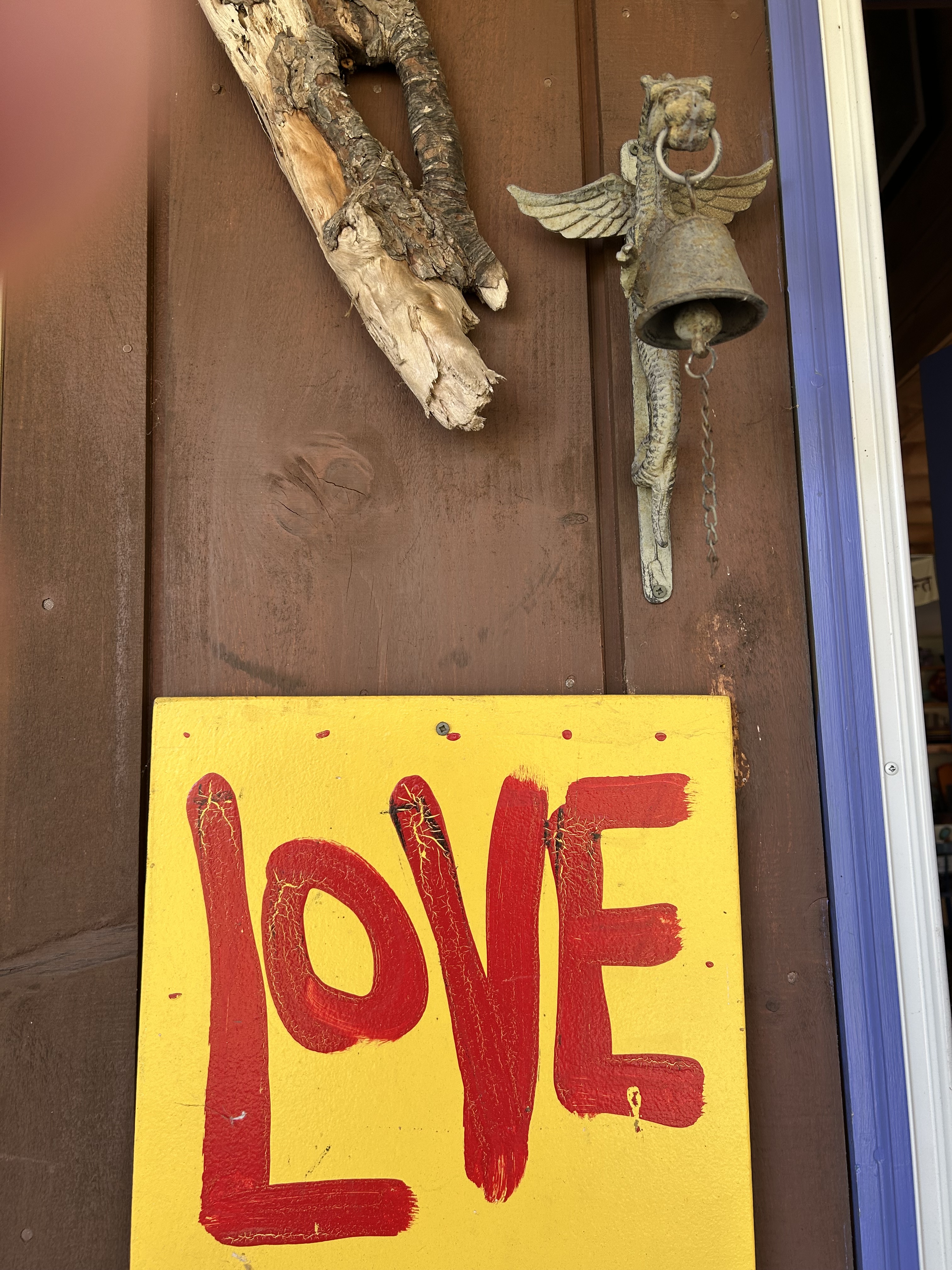
Mothering is sleepless nights; crushing realizations that we can’t know our kids’ experiences, knowing we can’t protect them from so much; realizing we have to be the one–to call people in to see some things they haven’t had to see. Mothering has been, for me, learning to do and be Love. EVERYDAY women ( mothers, aunties, grands, birthgivers, fostering and adopting, teachers, friends ) take actions big and small to resist violence and disregard toward kids.
Caring & Loving is not gendered. Caring for Our planet. Our Oceans. All children. It is the most fulfilling work to do and it is never done. It is physical, spiritual, exhausting, and absolutely joyous.
Mothers’ Day has been usurped for a commercial mid-May Whoopie. The day was born in fierce resistance and honoring of mothers. Here is a quick and white history of Mothers’ Day thanks to Howe and Jarvis’ efforts.
“Battle Hymn of the Republic” author, abolitionist, women’s rights advocate, and peace activist, Julia Ward Howe worked to establish a world-wide awareness with an “Appeal to womanhood throughout the world.” Mothers of the Civil War era, and Howe and Jarvis, saw a need for women who fought so hard for peace and reconciliation to be recognized.
Anna Jarvis’s mother, Ann Maria Reeves Jarvis, had cared for Confederate and Union soldiers and after the Civil War worked to bring families together, despite threats of violence. Anna continued her mother’s work for public health across Appalachia. She wanted mothers to be honored, singularly. She convinced President Wilson to proclaim the first national Mother’s Day just before the start of World War I in 1914. She wanted handwritten notes, not cards bought and sold; honor not commercialization.
In 1948 Anna “died penniless in a sanitarium where her bills were paid by the same greeting card companies and florists she despised.”
Now, more than ever, Celebrate your Mom(s). Honor every mothering human you know. Be Fierce in your love. Be Fierce for Peace.
Be Radical Love.
Photo by Vermilya: orbitoflove.com
Resources:
https://womenshistory.si.edu/blog/history-mothers-day-global-peace-greeting-card https://en.wikipedia.org/wiki/Mother%27s_Day_(United_States)
Take Back the Night. And Every Minute of Every Day.
39 years ago –Microbiologist Susan Alexander Speeth left her office on an April evening to walk home. She was alone, and she didn’t make it. She was stabbed to death by a stranger just a block from her house. Her murder in Philadelphia sparked the first Take Back the Night march.
39 Years ago and WE ARE STILL HERE—- what do you think about that?
What can I say that hasn’t been said over the past four decades—or is it the past few thousands of years? Talk about patience…..perseverance….resilience.
When it comes to sexual violence against so many of our bodies: women, trans, gay, lesbian, sex workers, those incarcerated, or in the military—men and women—-we are all still up for grabs. The elderly, the infirm, children too. We must continue this march and rally.
I am amazed at our patience –yeah—- I know change takes time……. THIS is a long, LONG time— and I want to say we need to start thinking differently about our approaches.
Talking about time —-Here is a little bit of my story—a little bit of why it is so important for me to be here tonight with you
I attended my first march with other ten and twelve year olds in Woods Hole, Massachusetts one summer. It was against the war in Vietnam and we were kids and proud of our effort. It would be a few more years before that war was “over.”
It would be another few years before I understood how important our voices were for speaking out about women and gay liberation. Abortions were not legal and women died cloaked in silence. Gay bashing was a sport, also drenched in silence.
I walked down city streets in a boy’s cap and baggy pants. I counted on my androgyny and converse sneakers to protect me. I experienced date rape thinking it was my fault because I was drunk and I’ve been beat up by a girlfriend because I was leaving. I quit drinking and to this day, I am still learning to speak up.
In my first teaching job an older student talked about her upbringing, the abuse she encountered as a child. I encouraged her to write about her childhood. She chided me, adamant that her experiences were not interesting— “Why should I write my story? Sexual abuse is an occupational hazard of being a girl.”
NOT ANY MORE!
It is important to me that we are together—telling our stories, realizing we are not alone—refusing to accept that date rape, sexual abuse, rape, domestic violence and murder is just the way it is and living in constant fear is inevitable, to be expected. But too often it is still true.
We now know too well that sexual and physical abuse is equal opportunity-perpetrated upon all people. So this belongs to all of us! The Soccer moms I hung out with the other night *yes—totally— I am one! * were talking about being wary of running alone. One of them — a forty-something traditional woman, her hair getting just a little gray, talked about a van that slowed down next to her on a dirt road near her house, and she heard a voice from inside, “Never mind—she’s got a dog.” Yes—this is Vermont—and this story is so global.
We’ve accomplished so much through legislation, political awareness, and education—
We wear our seat belts, don’t smoke so much, don’t pollute so much. We recycle, eat less salt, fat, sugar. Gays and lesbians can even marry—at least for the moment. We know legislation doesn’t always equal change—the real open mind and heart kind of change. That takes time, doesn’t it?
But when it comes to sexual violence, we are all vulnerable.
No mother raises a son to be a rapist, an abuser, or a violent criminal. A whole convergence creates the individual who harms another—and this convergence is where we have to incite our new revolution—we have to come together—queer, straight, trans, fundamentalist, fragile, male, female, macho—parents, neighbors, social workers, health care workers, government officials, bus drivers, educators—we have got to cross all barriers of thinking and believing to get to the root of this culture of violence, harm, and disregard.
Let’s gather the voices of the fathers of daughters and sons who have been raped. We need to hear the ER doctors and nurses who dress the wounds of violence. We need to inspire every teacher from preschool to college, the dentists, the mothers, fathers, sisters, brothers, uncles, aunts, grands and friends who know the violence exists, who know from their own experience or the experience of loved ones, that this violence, random and premeditated—happens—and give them the courage to fight against being held hostage—being so afraid.
EVERYONE is harmed and all of us hurt—
Sexual violence is older than these hills, and we won’t snap into a new era overnight–however—
This pandemic of power is impacting all of us. There are messages all over the place dedicated to the eroticization of violence—how sexy to carry an automatic weapon, how cool to play with guns, gaming with killing, singing along with lyrics about sex that is demeaning and objectifying our bodies. And there also seems to be a renewed insistence on gender codes from the fashion and toy industries. Have you been shopping lately for kids’ clothing or toys? You know—all that PINK and camouflage……
Bully attitudes prevail -and paralyze- our democracy, our school hallways– and…. what do we call it????—this, this pandemic of power over –over— –over all of us—
How can we be creative and incite change?
How do we counter all of these messages—how do we be cool without the humiliation and violence?
Let me tell you another story—
My children, (teenagers now) at the ages of 3 and 4 were singing ‘Eric and Annie sitting in a tree, k-i-s-s-I-n-g in a tree’….and I interrupted asking if they realized how heterosexual the song was, no baby had to come of kissing, protection is easy………
So you see I started my safe sex and awareness training very early—–and my daughter –all of 4—listened and sighed, “MOM—it is just a song.”
Little did I know then what we’d be listening to now! Like Blurred Lines—
“But you’re an animal, baby, it’s in your nature”
You all know how it goes…..
“I’ll give you something big enough to tear your ass in two.”
…..It is just a song…….
It’s just a song, it’s just a movie, it’s just a word….and it gets passed down generation to generation, it is ‘just the way it is’…..and it has been 40 years and it seems the violence has only spread.
So how do we think outside the boxes we are popped into at a very early age?
How do we learn to cross the divides that have kept us from working together, kept us from hearing and knowing one another’s story?
Good beat/ denigrating lyrics—do we buy it? Literally and figuratively!
How do we claim our power, resist, create our own media messages?
How do we think carefully about our everyday assumptions –and even acceptance –of all this violence?
There is something happening that’s taking our nights and days. We are here on a college campus to learn. Okay, so let’s GO! Let’s learn. Let’s figure this out.
People in my generation have been working at this for at least 40 years, we need your fresh thinking. So here’s my challenge to you – take this question back to your dorm rooms, your apartments, your classrooms, ask each other the question: what is going on? How can we change it? You can find the way—create the right conversation—figure out new approaches—
Here’s an idea to start you off — You all know social media — can we turn that sword into a new ploughshare?
OH…and by the way
I don’t want us to just take back the night—I want all day too—-we have work to do and —it will take all of us—-
April 17, 2014 2014 2014 2014
Shelley Vermilya teaches race, class, gender expression, sexualities— all those delicious intersectionalities and complexities— at UVM and SMC. Visit VermilyaNotes.net to see what she’s been reading and thinking about. She has a photography show at Flying Cloud Gallery in May and for the first time ever, she will participate in the Swim4Life in Provincetown.
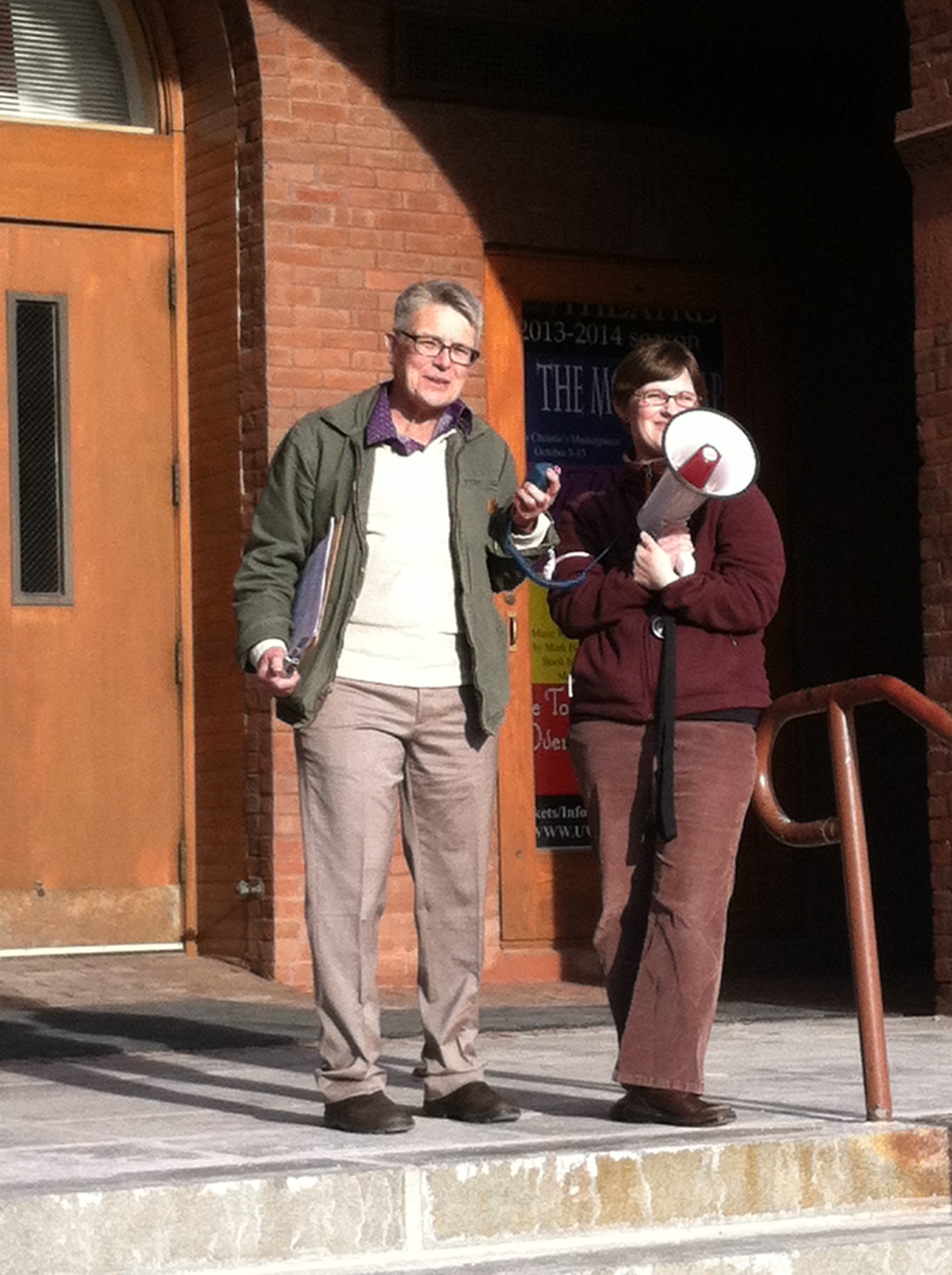
I was invited to present the keynote speech for the Burlington Take Back The Night Rally, March & Speak Out Against Sexual Violence. I would like to thank the organizing committee, folks from the University of Vermont, HopeWorks, and Saint Michael’s College, for this opportunity. It really got me thinking.
2014 2014 2014
50 years ago now— 2025
Cultivating Joy
Especially Now
On the beautiful first of May, I visited one of our elementary schools. I wasn’t quite sure just what was happening as I walked to the front door. The kids spilled all over the grass and along the curb in front of the school with their lunch trays. There was a lot of noise, and it wasn’t just cheerful shouting. Every car and each huge dump truck driving by was honking. As I walked into the building, I heard a young voice say, “Isn’t this great? We’ve had 7 honks already today!” The eighth beeped as my feet crossed the threshold.
This scene is so striking. Kids being kids on a warm day when winter’s grip is finally letting go. We know our kids’ brains are rewiring when many hours are spent in front of screens. Our school guidance counselors, nurses, student services, and social workers are engaging with students, parents, and teaching staff every single day as we all navigate anxieties and the unknowns of our time. Administrators, as far as I can tell, and the Buildings and Grounds crews, are spinning along with everyone as they navigate the needs of all of us. Meanwhile, kids find glee when the dump truck drivers honk their horns.
Field trips, step up days, theater productions, athletic events are all happening this month. Schools are planting their gardens. This is a great time to volunteer at your local school as gardens need tending. Being outside together, learning how a tiny seed emerges to become a carrot, or a leaf of lettuce are lessons in real time and the slow pace of growing.
The scene of kids sprawled on the lawn, waving back to neighbors and dump truck drivers is one of absolute abandonment to the moment of beeping and waving and cheering. A sudden burst of joy. To cultivate joy is to plant the seeds of community.
Especially now — when our social fabric is fraying and tearing. May you make some unpredictable joy.
A Promise: Daffodils will be here soon
Although we don’t get official recognition, April is Vermont’s Month of Mud. After a cold and fabulous season for snow sports, mud is for everyone. The most philosophical among us could write a sonnet or song. You may already be humming Vermont singer-songwriter Noah Kahan’s ‘Stick Season’ as you read along.
As the sun shines longer each day, mud and sticks start transforming from inert to active; growing begins in earnest. The Vermont landscape kind of forces us to be resilient, to adapt to the conditions out our door. May this be a natural dose of courage—to climb the muddy hill to home.
I’m concerned about the impact these tumultuous times are having on our students, our teachers, all our parents, administrators, staff, and all our community members. How might we be kind and more careful as we navigate the political and social wild weather ahead together?
“The Declaration of Independence was written with a feather,” Dean Young reminds us in his poem “Belief in Magic.” I see the fragility of democracy in this line as well as the amazing strength of a quill. What bird contributed to our founding guardrails? Goose, swan, crow, owl, hawk, turkey, or eagle? I read that Thomas Jefferson raised special geese to keep him in writing implements.
Some of you may know the children’s books by Laura Numeroff: If You Give a Moose a Muffin, If You Give a Mouse a Cookie. These books offer an important observation about learning — one thing leads to another as curiosity and passion inspire. The nib of a goose feather wrote a document full of dreams of what could be — a nation, no less. A promise so many of us still seek. These times offer an invitation to be our best creative selves as we respond to all that is happening in the nation and our communities.
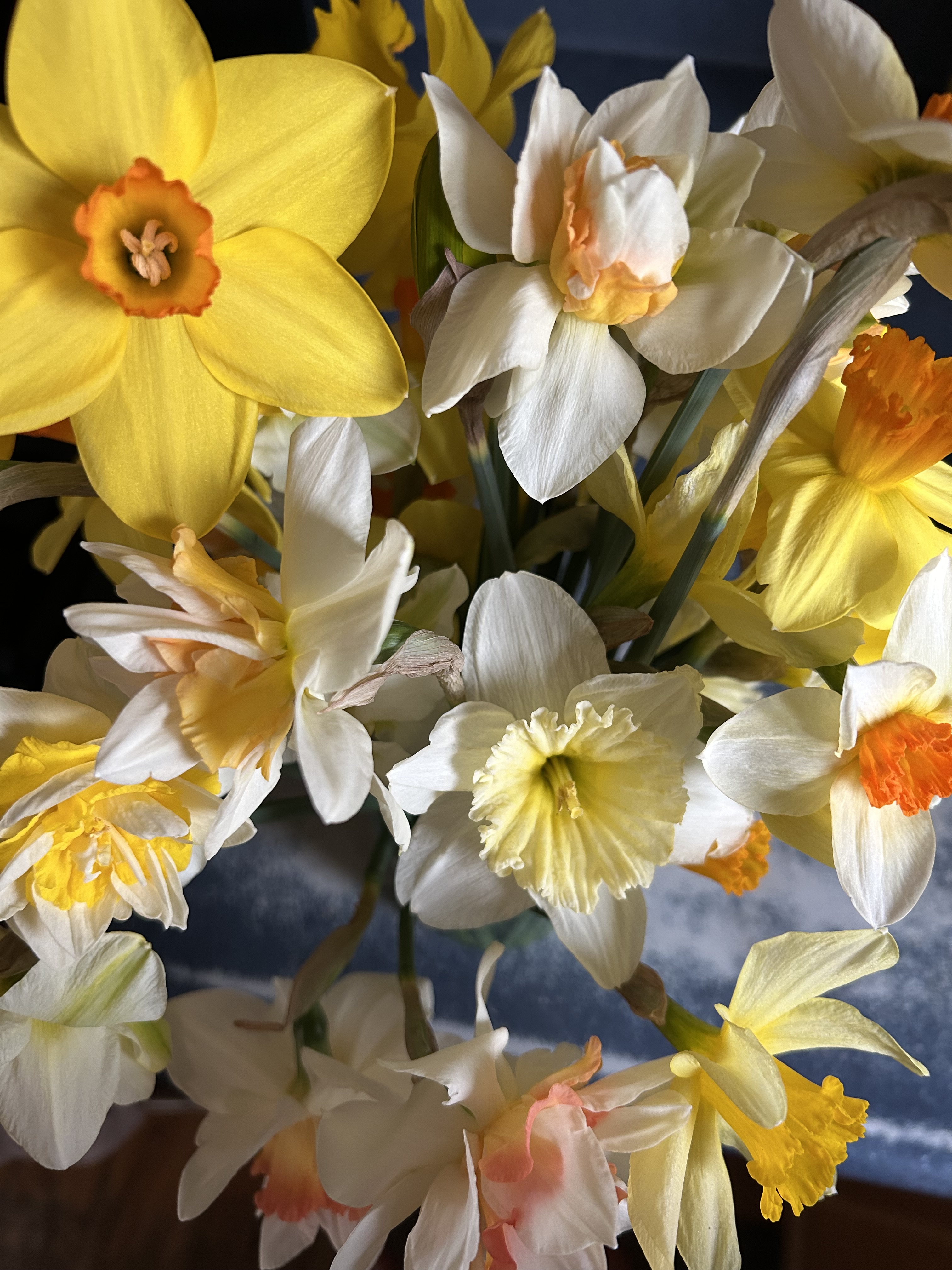
The daffodils are emerging slowly, surely. May their fragility and strength remind us—we are in this together and our courage emerges when we find what connects us. In Dean Young’s poem there is another line, “I believe reality is approximately 65% if.” If we realize there are so many more ways in which we are similar, we’ll emerge with the daffodils, strong and bright, as we meet what’s ahead.
As you know, Justice is just us.
Notes of Incredulity
July 18, 2023
A friend lamented how a conversation we had been in together made her angry, angry about all the things happening in our country. Although our group had made some good points about actions that were hopeful, she just wondered if we understood the magnitude, if our heads were buried in the sand. This led me to wonder about ostriches.
An ostrich can be nine feet tall. They do -not–bury their heads in the sand. Obviously, now that we think about it, they wouldn’t do such a thing since they must breathe. Instead, with better observation, they are being good parents, tending their eggs, turning them over, keeping them safe.
After decades of thinking this idea of the ostrich, when attributed to human behavior, meant not being willing to face facts, hear distressing news, or deal with reality, it seems like a fabulous paradigm shift.
Let’s deal, let’s nurture, let’s face it. As Gill says, “why else would we plant trees that we know will never shade us?”

This collection of books has offered me amazement. So many things I just never knew. I include Rabbi Brous and Dr. Heather Cox Richardson, who are not in the texts above, because– I just had to to get started. You’ll see.
I offer a very curated list of things that jumped out, within the context of these books that are full of revelations. Revelations=hidden horrors, denied truths, intentional and insistent silences, knowledge concealed.
Why are things the way they are and what do we do?
Let me know what you see, what piece you found to complete a puzzle in your understanding. This is a conversation. Or, better yet, this is a call and response.
Endnotes offer source and page numbers. Please accept my apologies for wacky formatting. This is Word vs. WordPress.
Here we go!
A Bible printed in 1807 for enslaved people in the British West Indies did not include the story of Moses, the Exodus, the promise of Freedom. Rabbi Sharon Brous
The draft riots in New York City of 1863 were the result of northern Democrats, who sympathized with their Southern comrades regarding slavery, and Republicans who opposed the expansion of slavery. New York City and the cotton trade were booming. Republicans of this era answered the call to join the Union army. The Democrats opposed the federal government’s draft “and its willingness to slaughter white men for Black people.” The first lottery for the draft incited NYC Democrats to riot, to attack federal draft officers, buildings, and then the Orphan Asylum for Colored Children, and at least 119 Americans, mostly Black individuals, died. (my synopsis- see HCR) Heather Cox Richardson
Viral Justice: How We Grow the World We Want
Ruha Benjamin, born in Wai, India, is a professor of African American studies at Princeton University, founder of the Ida B. Wells JUST Data Lab, author of People’s Science (2013), Race After Technology (2019), and Viral Justice (2022).
“Remember to imagine and craft the worlds you cannot live without, just as you dismantle the ones you cannot live within.”
Lantern laws of the 18th century required Black, mixed race, and Indigenous people carry a candle lantern when not accompanied by a white person. (Today Facial Recognition Technology has replaced the lantern.)
23,000 + gun suicides occur each year, the rate among white men in the U.S. far outpaces those of other groups. “From cuts to the social safety net, to lenient gun laws, whiteness shows reckless disregard for even white people’s safety.”
In 2016 George Zimmerman auctioned the gun he used in 2012 that killed Trayvon Martin. A woman bought it as a gift for her son for $250,000.
Between 2015 and 2020
- LA country spent $238.3 million
- Chicago spent $252.8 million
- NYC spent $1.1 billion to settle police misconduct claims.
“I believe unconditionally in the ability of people to respond when they are told the truth.
We need to be taught to study rather than believe, to inquire rather than to affirm.” Septima Clark, an adult educator of the 60’s civil rights movement.
Let This Radicalize You: Organizing and the Revolution of Reciprocal Care
Mariame Kaba is an author, educator, librarian, organizer, abolitionist, and founder and director of Project NIA envisioning an end to youth incarceration. Kelly Hayes is a Menominee organizer, educator, author, and photographer. She is cofounder of the Lifted Voices collective and the Chicago Light Brigade.
“Let this radicalize you rather than lead you to despair.” Mariame Kaba
“So this has been a lot of my work. To help people open to and become enamored of the
idea that they’d really like to see what was going on. And to open the eyes and open the
heart to discover, again and again, universally in the work, that acceptance of that discomfort
and pain actually reflected the depths of your caring and commitment to life.”
Joanna Macy
Capitalism requires an ever-broadening disposable class of people in order to maintain
itself, which in turn requires us to believe that there are people whose fates are not linked
to our own, people who must be abandoned or eliminated. Absent that terrible belief, we
would not tolerate the horrors that unfold around us each day. We would be collectively
enraged that people live unsheltered, hungry, die of treatable illnesses because they lack
money. We would be horrified…
We do not suffer oppressions identical to those of our ancestors, but the struggle against
our oppressors has never ceased. …shifted in shape…The histories of those struggles and
the specifics of what people endured are intentionally buried in US culture because they are
dangerous: full of revelations and tactical knowledge that could help us more effectively
challenge authority or even shift the course of human experience.
“Joy is not the opposite of grief. Grief is the opposite of indifference….” Malkia Devich Cyril
A Terrible Thing to Waste: Environmental Racism and Its Assault on the America Mind
Harriet A. Washington is a bioethicist challenging the medical community to revise the narrative on race and research. Her 2007 Medical Apartheid: The Dark History of Medical Experimentation on Black Americans from Colonial Times to the Present rocked professionals and involved “prodigious research, “into…long undisturbed” resource materials. A Terrible Thing to Waste continues the revelations.
…Epidemics of infections, including influenza, have been followed by waves of mental disease and cognitive-loss neuro-psychiatric symptoms such as insomnia, anxiety, depression, mania, psychosis, suicidality, and delirium.
Coronavirus seems to be no exception….
“I am somehow, less interested in the weight and convolutions of Einstein’s brain
than in the near certainty that people of equal talent have lived and died in cotton fields
and sweatshops.” Stephen Jay Gould
The treatment of “poor whites” as a racial group illustrates race is not an innate biological reality but a sociopolitical construct that is useful to maintain political biopower.
But race is a social reality with real-world biological consequences and nowhere is this more apparent than environmental racism.
“sacrifice zones” and “food deserts”—Help ensure brain eroding nutritional deficiencies. “When it comes to exposures that limit cognition, race as a social construction becomes race as biological fate. Unless we chose to intervene.”
… the reduction in gasoline lead was responsible for most of the decline in U.S. violent crime during the 1990s.
Blame the victim—Freddie Grey and Kerry Gaines—victims of police violence and lead poisoning.
“In poverty, as in certain propositions in physics, starting conditions are everything.
There are no secret economics that nourish the poor; on the contrary, there are a
host of additional costs.” Barbara Ehrenreich
“Every block in the ghetto has a church and a liquor store.” Dr. Walter Cooper
MD 20/20—produced by Mogan David Wine Co. (kosher dessert wines) so potent called Mad Dog—
Night Train Express- Ernest & Julio Gallo 17.5% alcohol
“But you won’t find these hardcore libations among the sedate table wines on their websites….”
{Menthol cigarettes—unavailable except in neighborhoods of color}
His Name Is George Floyd: One Man’s Life and The Struggle for Racial Justice
Robert Samuels was a journalist for The Washington Post and is now a staff writer at The New Yorker. Toluse Olorunnipa is Nigerian- American and the White House Bureau Chief of The Washington Post. The co-authors interviewed childhood and adulthood family and friends, they read thousands of documents, watched videos, and combed the reservoirs of all who knew him to the very end. One human, one man vs systemic impossibilities at every turn.
Born October 14, 1973, in Cape Fear, Fayetteville, NC. George Floyd at thirteen told his sister Zsa Zsa,
“I don’t want to rule the world, I don’t want to run the world. I just want to touch the world.”
He did not get his high school diploma because he failed math which also ended his dream of playing college football. Or basketball. He loved both. Growing up in the Third Ward housing project of Houston, athletics were the exit tickets to freedom. He died Memorial Day, May 25, 2020, in Minneapolis, MN.
Menthol cigarettes…..he was purchasing them at the convenience store that day.
Darnella Frazier, age 17, posted on Facebook and Instagram, her live video of Derek Chauvin pressing his knee on George Floyd’s neck for 9 minutes and 29 seconds. According to Dr. Martin Tobin, a pulmonologist who testified at the trial, it is hard to compress below the Adam’s apple—but above is an extremely vulnerable part of the neck with little cartilage to shield from external forces. That is where Chauvin pressed his knee.
Ben Crump, lawyer, watched the video and called it “torture” (he was also working with families of Breonna Taylor and Ahmad Arbury).
Crump:
“About thirty years ago, forty years ago, Black people would get killed by police
constantly and nobody would go to jail and no one would get a chance for civil justice.
If we didn’t start doing what we were doing, making this a public health crisis, they
would continue to kill Black people with no consequence. I’m making it financially
unsustainable for them to keep killing us.”
“Any difficulty and we will assume control, but when the looting starts, the shooting starts,” then president Trump. White supremacists embedded the crowd of protestors and provoked violence and anarchy—Aryan Brotherhood man in black with an umbrella firebombed a store to start.
Medical examiners had misclassified or covered up nearly 17,000 deaths that involved police between 1980 and 2018.
The Asteroid and the Fern
Jacquelyn Gill is Associate Professor of Paleoecology and Plant Ecology at the University of Maine in Orono. Her work is in paleoecology, community ecology, vegetation dynamics, extinction, climate change, biotic interactions. She brings a perspective like no other.
“…In five billion years—nearly as long as the Earth has existed—our sun will explode,
regardless of whether we are very good or very bad at tending to the planets it illuminates.
This fact does not lessen our responsibility to fill that time with as much regard for life
as we can, in the liminal space between Earth’s creation and destruction. We have
always known this, deep down, why else would we plant trees that we know will never shade us?
The great irony of the fossil record is that we wouldn’t be here without extinction. Had the dinosaurs not died out, there would have been no age of mammals and no “us.”
“What could we accomplish if we stood together and faced the danger? What seeds might we plant today that will one day take root above our bones? What if the future was better than the past?
What if it was beautiful?”
in Not Too Late: Changing the Climate Story from Despair to Possibility
<><><>>>><><><>>>><><><>>>><><><><<<<><><>
To contemplate each thought, each statistic, takes a mindful commitment. It may be overwhelming at times, as has been true for me with each book. Honor the new knowledge, forgive not knowing because much of this content has been intentionally made difficult to find or silenced. Two final quotes to share:
Angela Davis’ mom would say to her, “This is not the way things have to be.”
James Baldwin reminds us, “Wherever human beings are, we at least have a chance because we’re not only disasters, we’re also miracles.”
Let’s be the miracles.
ENDNOTES
Rabbi Sharon Brous
Imagine A Bible with No Moses, No Story of the Exodus
Heather Cox Richardson Letters From An American JUL 15, 2023
How Should Historical Sites Memorialize Trauma? On My Mind July 16, 2023
She notes that “many more people than usual wrote to tell me they had never heard of the riots. There are very few memorials that mention the draft riots, and I wonder, does the lack of those memorials contribute at least in part to that amnesia?”
Viral Justice: How We Grow the World We Want by Ruha Benjamin (2022)
Bio& quote https://www.ruhabenjamin.com/
Lantern laws of the 18th century … (148)
23,000 + gun suicides occur each year…(48)
In 2016 George Zimmerman auctioned the gun … (49)
Between 2015 and 2020….to settle police misconduct claims (60)
Septima Clark,…I believe unconditionally… (107)
Let This Radicalize You: Organizing and the Revolution of Reciprocal Care by Kelly Hayes & Mariame Kabe (2023)
Joanna Macy interview with Dahr Jamail (2017( 253
Capitalism requires an ever-broadening disposable class of people… (32)
We do not suffer oppressions identical to those of our ancestors …(100-101)
A Terrible Thing to Waste: Environmental Racism and Its Assaulton the America Mind by Harriet A. Washington (2019).
Stephen Jay Gould from (1992) The Panda’s Thumb: More Reflections in Natural History. (23)
The treatment of “poor whites” as a racial group… (57)
…When it comes to exposures that limit cognition, race as a social construction becomes race as biological fate. Unless we chose to intervene. (57/58)
… the reduction in gasoline lead was responsible for…. (89)
Freddie Grey and Kerry Gaines—victims of police violence and lead poisoning (97)
Barbara Ehrenreich in (2001) Nickel and Dimed: On (Not) Getting By in America. (164-5)
MD 20/20. Night Train Express. Menthol cigarettes (191)
His Name Is George Floyd: One Man’s Life and The Struggle for Racial Justice by Robert Samuels and Toluse Olorunnipa (2020).
I don’t want to rule the world… (11)
About thirty years ago, forty years ago….lawyer Ben Crump ((259)
Trump/embedded white supremacists (271/272)
Medical examiners had misclassified or covered up nearly 17,000 deaths that involved police between 1980 and 2018 (U Washington study 2021) (303)
The Asteroid and the Fern by Jacquelyn Gill. In Not Too Late: Changing the Climate Story from Despair to Possibility. (2023). Rebecca Solnit and Thelma Young Lutunatabua (Eds).
In five billion years…(127-128)
What could we accomplish if we stood together and faced the danger …(129)
*****
Boys Will Be the Men We Raise Them to Be
“—we need “to raise our sons differently in order to protect our daughters …
we also need to raise our sons differently for their own sakes.”
To Raise a Boy: Classrooms, Locker Rooms, Bedrooms, and the Hidden Struggles of American Boyhood is written by mother of a baby son and young daughter, former middle school teacher, Washington Post journalist covering education and world events, and first confidant of Christine Blasey Ford, Emma Brown. She received responses to the Ford/Kavanaugh stories that prompted an epiphany: not only do we need “to raise our sons differently in order to protect our daughters … we also need to raise our sons differently for their own sakes.”[1]
YES! Teaching a course called Men and Masculinities, and my own mothering of a son and daughter gave me this insight too. Every young woman in class talked about how she prepares to walk alone – daylight or night: keys, pepper spray, cell phone, letting friends know location. The men conceded they had never thought of this, except those who describe themselves as gay. They too know caution at all times.
There is much to think about regarding guns and sexual violence and how boys learn behaviors. Brown begins with shocking material on brooming assaults that are nationwide, often involving high school athletes. This is not a book about growth charts and best toys for toddlers.
#MeToo and the increasing visibility of transgender and nonbinary people, Brown suggests, has “created more space for all of us to consider what gender is, and what impact gender norms and gender stereotypes have on our lives.”[2] Cheer another – Yes! The young people I work with, from Kindergarten through College, see gender as a spectrum, not just a flat line between boy and girl with strict boxes of behavior.
Gender is how we feel being in our body, mind, and heart, how we express and present ourselves to the outside. Most of us are raised in tight binary boxes. Many of us rebel. Even a small child can express exasperation at the rules.[3]
Casting off our socially expected gender armor can be challenging, but maintaining the façade can be literally deadly. Brown cites 2015 Centers of Disease Control and Prevention statistics:
4 million men (and 5.6 million women) had been victims of sexual violence in 2014.[4] Death by suicide is staggering among white middle-aged men, according to the American Foundation for Suicide Prevention. This is not “horseplay.”
Brown explains a Columbia professors’ description of “sexual citizenship”[5]–respect and realizing sex is something you do with and not to, another person. Sexual assault researcher Mary Koss says, “When you are learning to drive your penis, you can really hurt people by mistakes you make due to inexperience.”[6] My students realize the conversations about sex and gender ought to begin ASAP—age appropriately of course.
Brown’s chapter, “Racism, Violence, Trauma: How Close Relationships Can Help Boys Cope,” describes the successes of Chicago’s Becoming a Man Program. She considers the way bias has impacted how Black boys think of themselves as well as how “implicit bias is like the wind: you can’t see it, but you can sure see its effects.”[7] Teachers and other adults in their lives can be blustery and harming when they don’t interrogate their biases.
It seems there are more similarities than differences between boys and girls/men and women. Sexual assault (‘SA’ students say) is utterly ubiquitous. Men need a liberation movement. The power and control issues that create a society of harming and hurting are harming everyone. There are societies that do not have a word for rape because it does not exist, which is impossible for western citizens to imagine.[8] If we really do become equal . . . .
Imagine.
[1] Brown, Emma. (2021). To Raise a Boy: Classrooms, Locker Rooms, Bedrooms, and the Hidden Struggles of American Boyhood. New York: One Signal Publishers/ Atria, p. 6.
[2] Ibid. p.13.
[3] Consider “Riley on Marketing.” YouTube video, 1.11. May 6, 2011. https://www.youtube.com/watch?v=-CU040Hqbas.
[4] Brown, p. 19. For much more information and updates see https://www.nsvrc.org/statistics.
[5] Ibid. p. 89.
[6] Ibid. p. 148.
[7] Ibid. p. 160, Walter S. Gilliam in an article Brown wrote for The Washington Post, 2016.
[8] Helliwell, Christine. (2000). “It’s Only a Penis”: Rape, Feminism, and Difference. Original publication Signs: Journal of Women in Culture and Society 25(3). Access: https://www.jstor.org/stable/3175417?read-now=1&seq=1#page_scan_tab_contents
Additionally, https://afsp.org/suicide-statistics/


 vermilyanotes