Curiosity
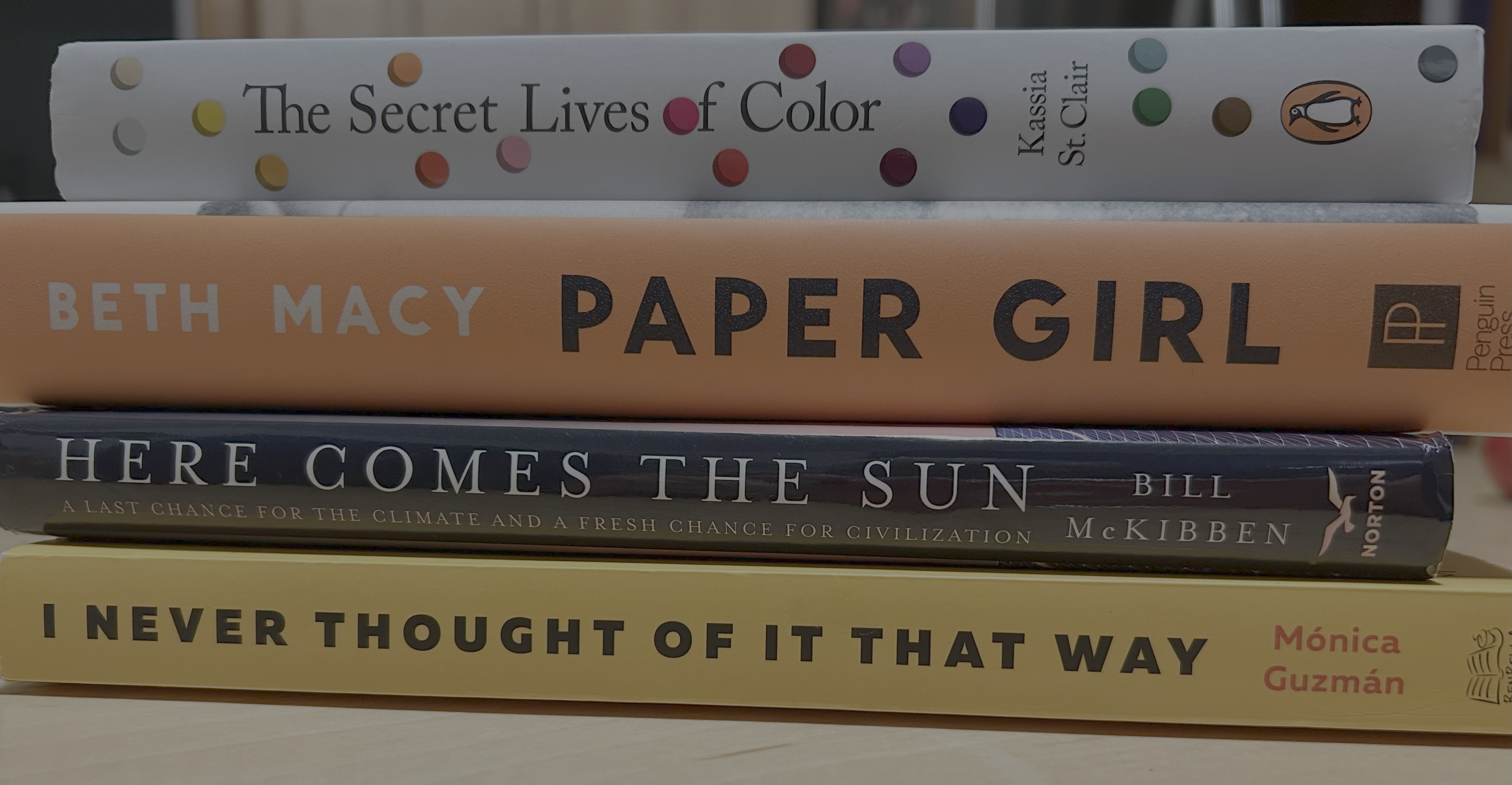
My job description includes reading, keeping up with ideas and information so I can be a resource to educators in their efforts to ensure that all students can thrive and learn. Lately, I’ve been reading about nature, art, democracy, history, and how to have hard conversations. Here’s a sample:
The Secret Lives of Color offers detailed historical and sociological stories of seventy-five colors. Did you know that about 70,000 dried bugs are needed for a pound of cochineal or crimson powder? Red dye E120 has been used in make-up, color for M & M’s and other foods? Or that pink was once a color just for boys, since it was closer to red, the color of war? Cerulean blue, on the other hand, represents peace along with olive branches on the flag of the UN.
The book that kept me up reading late recently is Paper Girl: A Memoir of Home and Family in a Fractured America by journalist Beth Macy. She returns to her hometown of Urbana, Ohio to understand the sharp changes there, wondering in particular how her family, former classmates, and neighbors’ perspectives and beliefs had shifted so far from where they’d been when she was growing up.
Her hometown had always been besieged by losses: of manufacturing jobs, of generations of family dying of alcoholism, drugs, and relentless poverty. Over the thirty years since high school graduation, those losses have grown devastatingly deeper. Public school teachers who had helped Macy survive and get to college were still at it–under very different circumstances. The story Macy tells is full of sadness and compassion for her hometown, and questions how communities like it might heal.
Here Comes the Sun: A Last Chance for the Climate and a Fresh Chance for Civilization by Vermont neighbor Bill McKibben is full of real possibilities and hope. A hopeful McKibben was intriguing since I’ve always thought of him as a climate truth teller, informative but discouraging. McKibben writes that the creative future of solar and wind power offers just about enough free energy for all. Imagine that.
Meeting people with curiosity is one of my guiding principles. I may wonder, how did this student or adult come to believe as they do? What is their experience? It brings out the best of my educator self and keeps me keenly wondering how things are the way they are. Sometimes those conversations are hard:
Have you been in situations when you just wish you had a response to something you can’t believe was said? My colleagues and I wonder sometimes, does that student even know what the word they just used means? How do we respond?
I Never Thought of It That Way: How to Have Fearlessly Curious Conversations in Dangerously Divided Times by Mónica Guzmán offers some answers to those questions. She writes,
“We don’t see with our eyes, after all, but with our whole biographies. It’s time our sense of perspective took that into account.”
Guzmán asks readers to consider others’ experiences, asking at one point if all of us could pass the naturalization civics test. It was humbling for me to look over the questions, knowing how crucial and precious passing this test is for so many. I would have to study hard to refresh my high school civics knowledge!
My curiosity keeps bringing me back around to how colors are made, to this fact in particular from The Secret Lives of Color about those crimson making bugs, “…in the year 1587 alone, around 144,000 pounds or 72 tons of cochineal were shipped from Lima [Peru] to Spain. (That is roughly 10,080,000,000 insects.)”
How in the world did someone figure that out!?!?!
Posted on October 27, 2025, in Uncategorized. Bookmark the permalink. Leave a comment.


 vermilyanotes
Leave a comment
Comments 0